
If you’re tracking Ubuntu 26.04 development snapshots and have been greeted by an unusually busy update queue lately, there’s no hidden feature bonanza behind it. What you’re seeing is mostly groundwork rather than visible change.
Ubuntu’s build infrastructure is currently reprocessing virtually the entire source archive. In simple terms, packages are being rebuilt from the ground up to ensure they align with updated hardware targets and compiler defaults.
The goal is consistency. By recompiling everything, Ubuntu ensures that applications, system libraries, and command-line tools are using the distribution’s chosen baselines wherever possible. That includes long-neglected dependencies that may not have seen meaningful changes in years, but still form part of the stack.
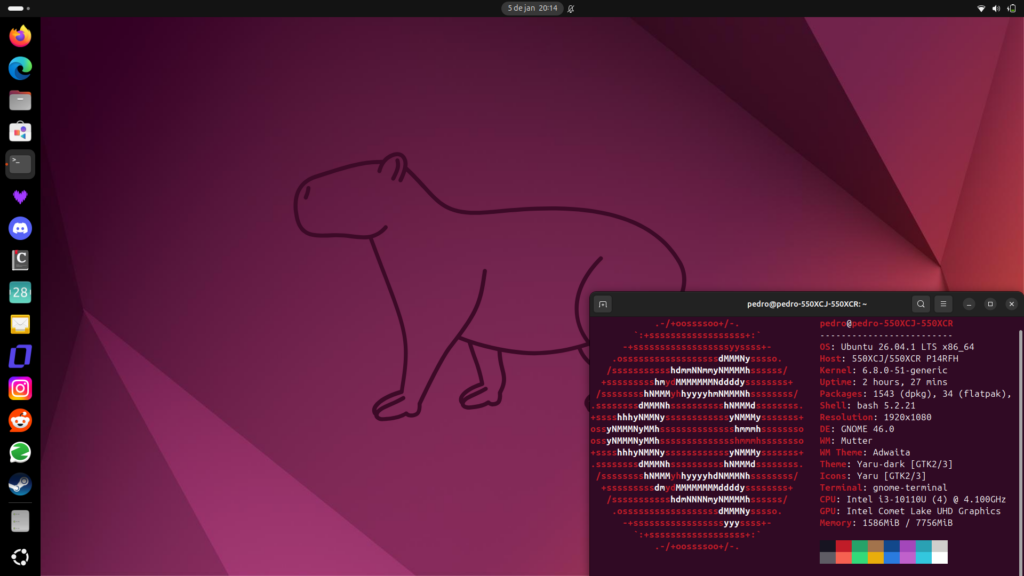
Because “Resolute Raccoon” is planned as a long-term support release, this kind of heavy maintenance work is par for the course. LTS releases are expected to age gracefully, and that requires a solid foundation from day one.
The ongoing rebuild touches several technical areas, including:
- Enabling frame pointers
- Improved ELF binary metadata
- Broader availability of amd64-v3 builds
- Adoption of the RVA23 baseline on riscv64
- IEEE long double support on ppc64el
- A Z15 baseline for s390x systems
At the moment, support for these varies between packages. Not every component can be updated to every new standard, and some older software simply isn’t designed to take advantage of newer architectural features.
Where they do apply, the changes are useful. Frame pointers make performance analysis and debugging more reliable. Embedding richer ELF metadata helps identify which package a given binary came from, simplifying diagnostics and maintenance.
Users running modern x86 hardware may also benefit from the wider selection of amd64-v3 packages. Ubuntu 26.04 isn’t switching to amd64-v3 by default, but it is increasing the number of packages built for that level so users who opt in can better exploit newer CPUs.
RISC-V is also getting attention. Since Ubuntu has raised its baseline to RVA23, ensuring the archive is rebuilt accordingly avoids compatibility gaps—especially as newer Ubuntu releases no longer support the older RISC-V profiles. While still uncommon on desktops, RISC-V is gaining traction in embedded, industrial, and edge deployments, where Ubuntu is widely used.
Additional improvements target PowerPC systems, which gain higher-precision floating point support, and IBM Z platforms, where the Z15 baseline allows customers to fully utilize their mainframe hardware.
The rebuild isn’t finished yet. If you’re following the development branch, expect a steady stream of package updates to continue appearing in your daily upgrades.